


Milo (answering the phone on speaker setting while rummaging in the fridge): Oh god, Adrian, please—can we talk about anything other than philosophy tonight? My brain’s mush, overcooked eggplant. I taught two improv classes and then played a trio gig at a coffee shop where the audience applauded exactly twice.
Adrian (dryly): Twice—that’s no bad. Relax. No philosophy. Not unless you send me a picture of you on your knees begging for it. How about architecture?
Milo: Architecture?
Adrian: Frank Gehry died today.
(A pause. The clatter of Milo closing the fridge door.)
Milo: …Oh. Wow. Um . . yeah, THEE great architect of our time. Definitely a fan, here.
Adrian: I know. He was the only architect I could name whose buildings looked like they were solving equations in midair.
Milo: Haha. And the only one who made you feel something. My god—Gehry! The American city just got even dimmer. Less like a sketchbook, more like a spreadsheet again.
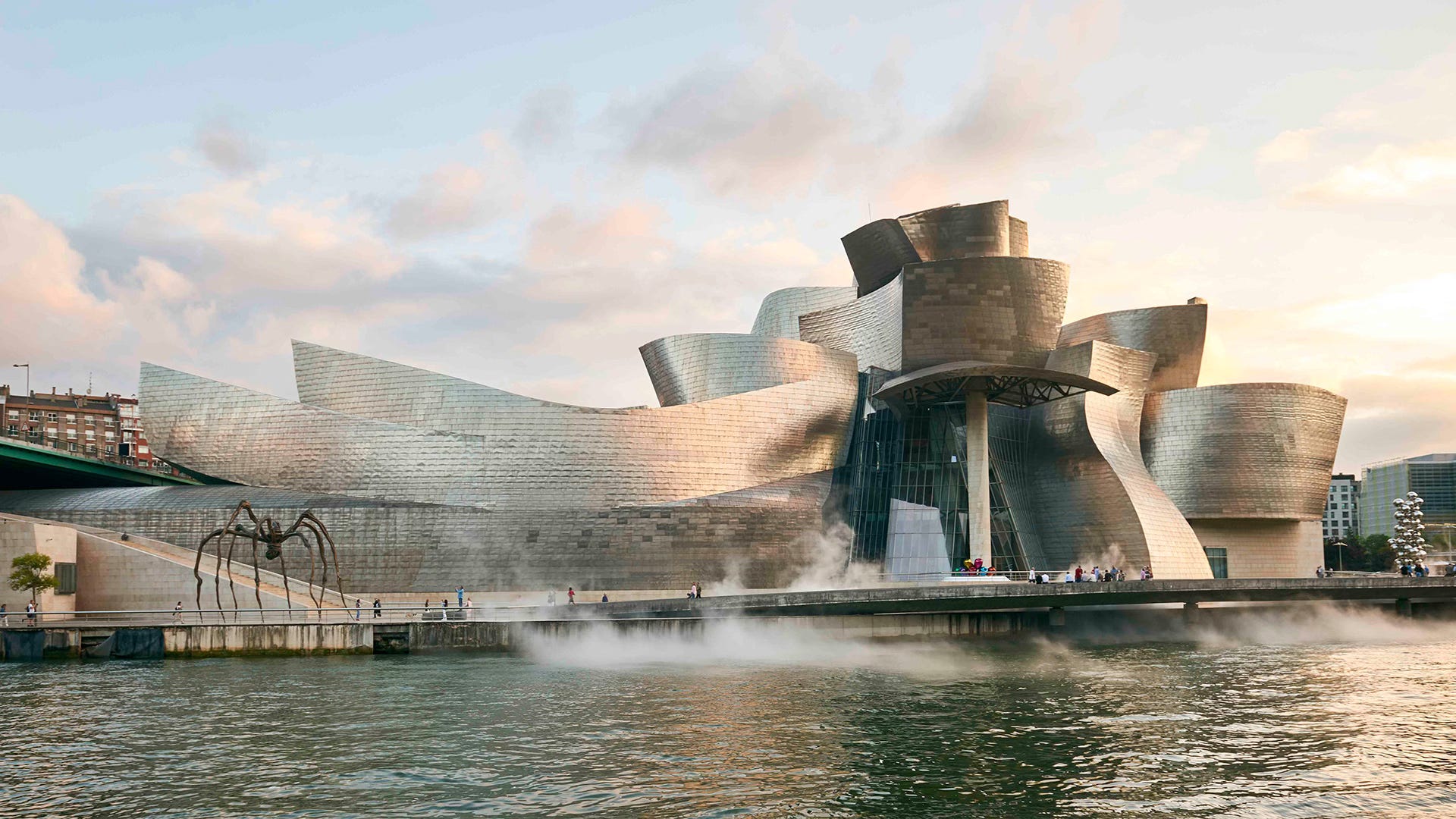
Adrian: I feel his buildings have a sense of permission in them. A freedom from the tyranny of right angles.
Milo: Yes! He made us feel like creativity was a civic right. I just read an article full of facts that point to our modern culture being a lot less creative and weird. And it’s not all the internet’s fault. Gehry created public spaces that didn’t have to be monotone and safe. He animated public life through sheer exuberance.
Adrian: And you’re already going to compare him to Frank Lloyd Wright, aren’t you?
Milo: Maybe. If you send a pic of yourself begging on your knees. Haha. Gehry’s the only one who even deserves the comparison.
Adrian: Go on, then. I’ll allow one romantic monologue.
Milo: Ok, I’ll give you one. Listen—when I first walked into Taliesin West outside Phoenix—back when I was in my early twenties—I felt that I didn’t walk, I just floated. Low ceilings that didn’t make one feel cramped, but rather in infinite space. Light came in sideways, like the sound waves of music. The walls were invitations to the next space. The whole place told you the earth isn’t beneath you—it’s with you and around you. I think that Wright healed individuals through intimacy and organic forms.
Adrian: Beautifully put. But Gehry—
Milo: Gehry healed whole cities. Wright healed the home, the hearth, the individual spirit. But Gehry animated public life through exuberance. He made civic space expressive, like a grin breaking across the face of a city too used to grimacing.
Adrian: Gehry healed cities. Nice. You know that Wright designed the first Guggenheim in New York, so there’s a built in comparison And I once read that he hated doing it, because he hated the city.
Milo: And then Gehry on to the Guggenheim in Bilbao—which wasn’t just a museum; it was a revolution. It resurrected a city. Reminded people that imagination can be a political, emotional power. His buildings didn’t sit in the landscape— they moved through it, like they were improvising. Which is what we humans do.
Adrian : So Gehry was Miles Davis and Wright was Bach?
Milo: Yes. Yes! Exactly. Wright gives you form that feels inevitable. Gehry gives you form that feels impossible until suddenly it’s there, shimmering like a humpback whale breaching in the sun. At least that’s my impression of Disney Hall. I’m glad you called. Is this loss bringing out some poetry in the mathematician?
Adrian: Gehry makes poets of everyone.
Milo: Or maybe grief does. I feel oddly… bereft. Like one fewer person is out there arguing with the ugliness of the world.
Adrian: We’ll still have the buildings.
Milo: Buildings endure. But the courage—we could use more of that.
Adrian: Maybe that’s our job.
Milo (laughing): Speak for yourself. I’m just a sax player trying to keep my students from overthinking their scales.
Adrian: And I’m just a logician trying to keep my students from overthinking the universe.
Milo: Haha. Maybe Gehry’s the bridge between us. He proved that structure can dance. That’s what you and I always argue about, isn’t it? How much the forms of reason can hold before they need to leap with empirical fact.
Adrian: And how much leaping can be justified before you need form.
(They fall quiet for a few seconds.)
Milo: What else is going on? Here’s to Frank Gehry.
Adrian: To Gehry—who made the world a little better by refusing to make it ordinary.
Milo: And who showed that beauty isn’t a luxury—it’s a public service just like cancer research.