


“Why haven’t you been painting?” asked Gustav’s sister.
They were sitting in the garden outside his studio, where the box elder maple was burning up in flame. A thin light sliced through the clouds and carved the world into abstract shapes and color as if insistence from the Voice of Existence, “Stop and Behold!” His sister wore a wool scarf, which she now felt too warm for mid-October. She tugged it tighter as if to defend herself from what he might say.
“How do you paint the autumn air?” he replied. “That cool feeling that condenses all of summer, like a fine Riesling. Obviously winemakers can do it. Or the hint of the coming Christmas fire? I could paint each of those, yes. But how do I paint that one thing we’re feeling in the air? I cannot capture what I feel. A fine Riesling is the best I know. Am I just ready for a drink?”
His sister, Marta, was used to such pronouncements. She had grown up hearing her brother’s metaphors before he even knew what they were—back when he would describe the color of her blue dress as the summer sky. There was a heaviness to him now that she couldn’t quite name.
“That’s the challenge. . . . Gustav, people still love your paintings,” she said. “The dealers are still calling. You’ve given the world beauty. What more—”
“Beauty,” he interrupted. “Yes, that’s what they call it. But beauty belongs to the world, not to the canvas. Every time I paint now, I feel as if I am stealing something alive and stabbing it to death. It’s like embalming a song. I can no longer commit this murder, this theft.”
Marta frowned.
“Aren’t those metaphors a little over the top?” she asked. “Are you aiming to be a writer now?”
She was accustomed to his ambition masking as defeat.
“Oh, come Marta! You know what I’m talking about. Don't play dumb.”
She had spent her life teaching literature to high schoolers, where beauty had to be explained.
“But isn’t art always a kind of theft?” she asked. “We take something fleeting and make it last.”
“That’s what I used to think,” Gustav said. “But lately I’ve begun to wonder whether permanence isn’t the enemy of truth. The air tonight: it lives because it passes. If I caught it, it would die in the act of being painted. Talk to biologists today, and they’ll tell you life is a process. This business of sequencing the genome and loading it up to a file. It’s not telling us very much.”
The wind lifted leaves from the ground, swirling them in a last dance of summer. Marta watched them settle again. “You sound like Dad,” she said finally. “He used to say the apples ripen without asking permission.”
Gustav smiled. “Yes. Dear old Dad!”
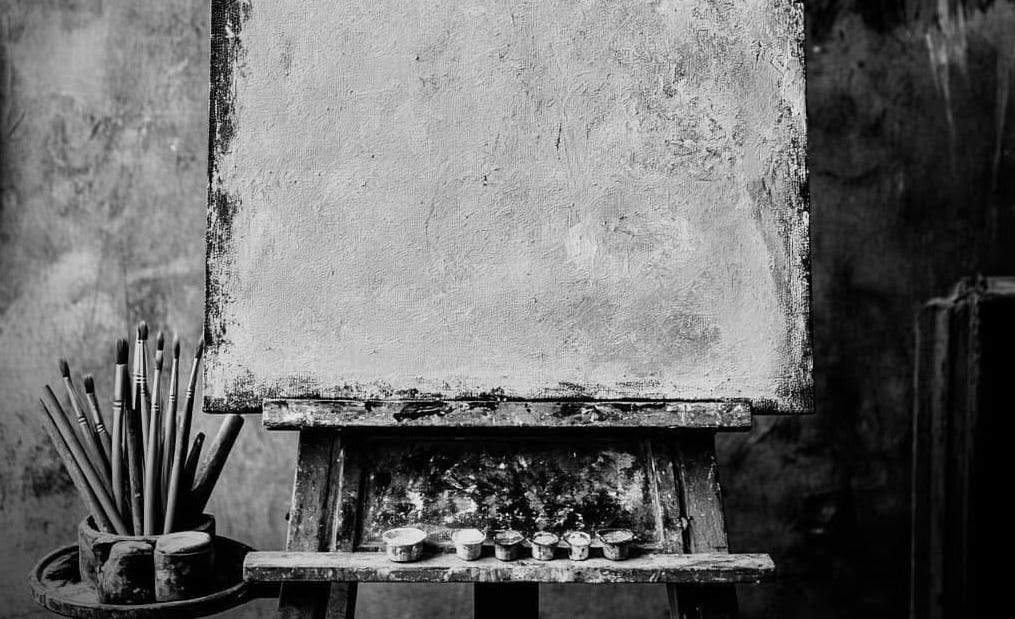
Thoughts of their father had stirred him to his feet. He looked toward his easel, standing back through the open doorway of the studio. The canvas was mostly blank, but the palette underneath was daubed with ochres and pale violets, as if he had begun and given up right away.
“I once believed,” he said, “that painting was a way of knowing. That to see was to understand—to get the whole picture, that whole feeling—immediately. A Gesamtkunswerk. The whole thing. But lately, I feel that seeing blinds me. The more I look, the less I really know. The world doesn’t want to be translated. Why should we insist? Just for our egos?”
“You’re talking like a philosopher again,” Marta said with a half-smile. “Since when did painters envy philosophers?”
He shook his head. “It’s the other way around, I think. The philosophers envy us. They build palaces out of thought, but the moment they step outside, the wind tears them down. But I’ve been trying to build a windproof thought with paint. It can’t be done.”
Marta leaned back and studied him. His once-steady hands stained of ultramarine, crimson, and yellow now rested on his hips. He was fifty-one, known for landscapes that shimmered between realism and quiet abstractions—the way early morning mist makes the ordinary look eternal. Critics called him “the painter of fragmented light.” She knew that he no longer cared about all that.
“Maybe,” she said softly, “you don’t need to capture it anymore. Maybe it’s enough that you’ve done it already.”
She was trying a new direction.
Gustav’s eyes were fixed on the maple tree now. “Perhaps,” he murmured. “Or perhaps what I’m painting now has no canvas.”
The garden grew quiet except for the rustle of the small family of quails beyond the oak brush. Marta thought of all the years he had painted. Each canvas had been a kind of diary, a record not of the world but of how he had been in it.
They sat, and the air changed again. The faintest shift, as if the earth exhaled. Gustav closed his eyes and smiled. “There,” he said, “did you get that? The world just turned a page.”
And Marta, though she didn’t understand him fully, nodded. The painter was still painting—only now, the world itself was his brush.
Later, after Gustav had gone inside, Marta lingered among the fall leaves. The air had cooled further, that fine Riesling crispness he’d spoken of. She could smell the cold meeting the sun-warmed earth.
For a long time she sat without moving. She thought of her brother as he once was—his hands always in motion. He couldn’t be stopped. He used to come home with smudges of cadmium yellow on his collar, humming to himself, always chasing light. Now he spoke of surrender and the futility of permanence. It frightened her a little.
When the light had almost gone entirely, she stood and went into his studio.
In late dusk the room smelled only of the painter and the possibilities. She could taste his paintings—she could hear them. What joy they had given her! On the walls leaned canvases from decades of work: the lavender dusk over San Francisco’s Sunset District, the apple orchard at the mouth of Zion Canyon in full bloom, the self-portrait painted on his forty-fifth birthday where his eyes seemed both weary and fertile.
Then she saw the last one.
It stood behind the easel where he had left it several mornings ago, the one he had said he couldn’t finish. At first it had appeared to her blank, but on seeing it closer she saw it glowing faintly in the dimness. She stepped closer. It was almost nothing, a specter.
And yet it didn’t vanish. The more she looked, the more it seemed to breathe. Shadows from the garden trembled across it. For an instant, she thought she could see the very air itself—the coolness, the melancholy, the living transience he had tried to describe.
She teared up and stayed there for a long time, watching the invisible become visible. Did he not see what she saw? It was no longer a painting. It was the threshold from seeing to feeling.
Back in the house, she found him sitting by the fire, his eyes closed. The flames wove light across his face, a genuflection, a benediction.
“I went into the studio,” she said softly. “And I saw your last canvas.”
He didn’t open his eyes. “And?”
“It isn’t blank.”
A slow smile touched his mouth. “No,” he said. “The air is never blank.”
They sat together in silence. The fire crackled. Outside, a string trio of crickets bade farewell to summer.
Marta thought of her students and how she had tried to teach them that poems were not things to be explained but moments to be lived through one’s life.
When she rose to leave, he said quietly, “Tomorrow, if the wind changes, I may begin again.”
But Marta knew he already had.